
We Live in a 3D World …
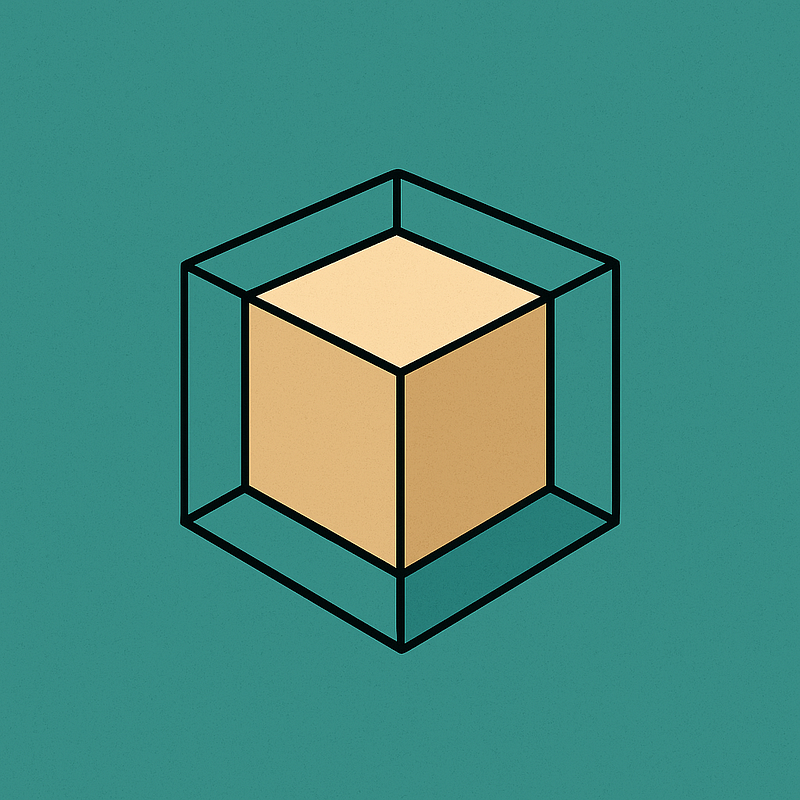
Imagine standing in front of a floating cube.
You see three sides — maybe the front, top, and one lateral face — clearly defined by light and shadow. From this angle, it feels like you understand the cube. But you’re only witnessing a partial truth. Three faces out of six.
Now imagine that someone else is looking at the same cube — but from the opposite side. They see a completely different set of faces. If both of you insist that your view is the truth, you’ll end up in conflict. But if you share perspectives, something magical happens: the hidden parts start revealing themselves.
We live in a world like that cube.
Partial Truths Are All We Get
Our brains are pattern recognition machines. We rely on sight, sound, memory, and context to make sense of the world — but that sense is always partial, never total. We’re wired to fill in the unseen parts based on prior experience, instinct, or bias.
When you look at a political issue, a product design, a person’s behavior, or even your own memories — you’re likely seeing just three sides of the cube. Not because you’re careless, but because perception always comes with limits.
That’s not a bug. It’s how human consciousness works.
You Can’t Rotate the Cube Alone
In a world flooded with information, we’re tempted to believe we can uncover the full picture by just digging deeper. More research. More facts. More scrolling.
But some parts of the “cube” aren’t accessible from your position — no matter how hard you try. They require a different vantage point. They require someone else.
The fourth, fifth, and sixth sides of the cube are often only revealed through dialogue, empathy, and collaboration. Not debate. Not dominance. But curiosity.
When someone challenges your beliefs, shows you a contradiction, or shares a lived experience you’ve never had — they’re not attacking your truth. They’re rotating the cube.
Truth Is a Team Sport
If truth were a fixed, solitary destination, we could get there by ourselves.
But the world doesn’t work that way.
Reality is nuanced, contextual, and layered. It bends under light and shifts with perspective. The more voices you allow into your view, the more sides of the cube you can begin to piece together.
This doesn’t mean abandoning critical thinking or taking every opinion as equal. It means inviting others to expand your field of vision.
We become smarter together. Not louder.
So What Do We Do?
- Pause before declaring something as absolute truth.
- Ask yourself: what might I be missing?
- Seek out perspectives that feel uncomfortable or foreign.
- Surround yourself with people who see other sides of the cube.
- Listen to understand, not to respond.
None of us will ever see the entire cube alone.
But together, we might just glimpse the full shape of truth.
Final Thought
The world is three-dimensional — but so are ideas, people, and perspectives.
If you only trust what you can see from where you stand, you’ll miss most of what matters. But if you let others rotate the cube for you — and offer to do the same in return — you become more than just informed.
You become aware.
Comments (0)
Loading comments...