
The World in Your Head: Why We Might Never See the Same Reality
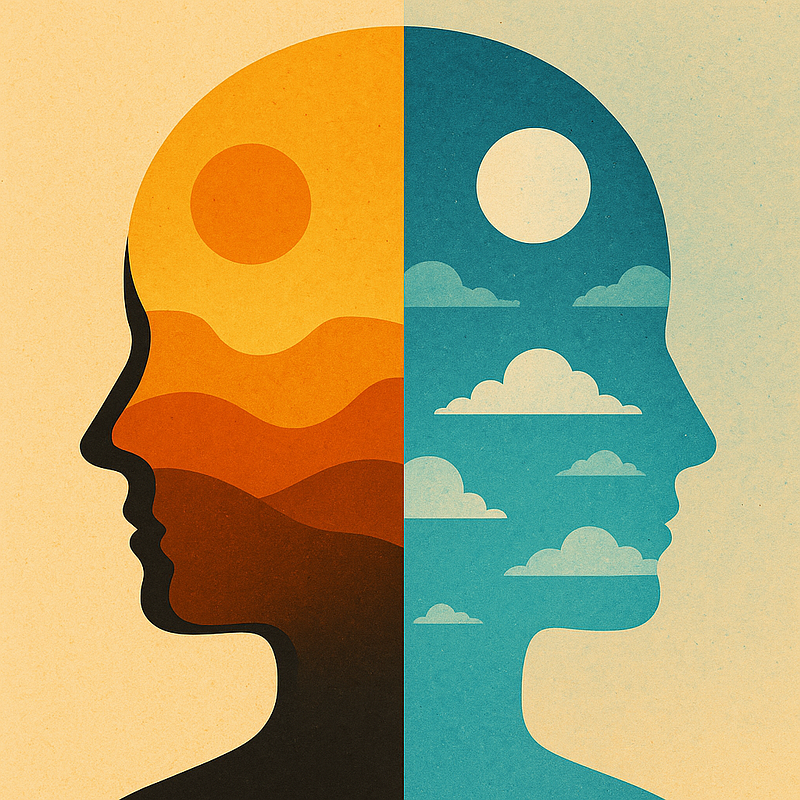
Do We See the Same World?
On perception, color, and the quiet subjectivity of reality
We grow up believing that the world looks the same for everyone. A red apple is red. The sky is blue. Grass is green. But what if we’ve all been living under a quiet illusion — one in which we’ve agreed on the words, but not on the experience itself?
The Color Illusion
Think back to your childhood. One day, someone points to a fire truck and says: “That’s red.”. From then on, every time you see that same hue, you label it “red”. But how do you know that the color you see is the same color they see?
You don’t. You never could.
Maybe what you call “red” looks more like their “green” — but because you were both taught to label it “red,” you’ll never know. There is no objective way to peek inside someone else’s visual cortex.
It’s a shared language, not a shared perception.
The Fragile Filter of Perception
Color is just the beginning. Our entire sensory world is filtered through subjective lenses:
- Taste: Cilantro tastes fresh and citrusy to some — and like soap to others.
- Sound: Some people hear in richer tones, while others experience certain frequencies as painful or distorted (e.g. misophonia or autism-related sensitivities).
- Touch: Pain thresholds vary wildly. What feels like a light touch to you might feel like an electric shock to someone else.
- Time: A minute in silence can feel eternal. A minute in panic, even longer. Meanwhile, hours can vanish during flow or joy.
- Emotion: The same event — a song, a memory, a conversation — can evoke tears in one person and indifference in another.
Our perception isn’t a camera — it’s a complex, interpretative dance between our senses, our brains, and our lived experiences.
What This Means for Empathy
This realization isn’t meant to isolate us — it’s meant to connect us.
Once you accept that others don’t experience the world the way you do, something shifts. You become more patient. More curious. Less judgmental.
You stop assuming people are “wrong” — and start wondering what world they might be seeing.
This is empathy, at its core. Not feeling for someone — but recognizing that your reality isn’t the reality.
So… What Is “Real”?
There’s a quote often attributed to Anaïs Nin:
“We don’t see things as they are, we see them as we are.”
It’s both beautiful and unsettling. Because if all perception is filtered, then the “truth” we cling to might just be… consensus hallucination.
And yet, in that shared hallucination, we find meaning. Language. Art. Love.
Even if we’re all seeing slightly different versions of the world — the very act of trying to understand each other’s versions might be the most real thing of all.
Comments (0)
Loading comments...