
From Screens to Systems: Why UX Needs a New Lens
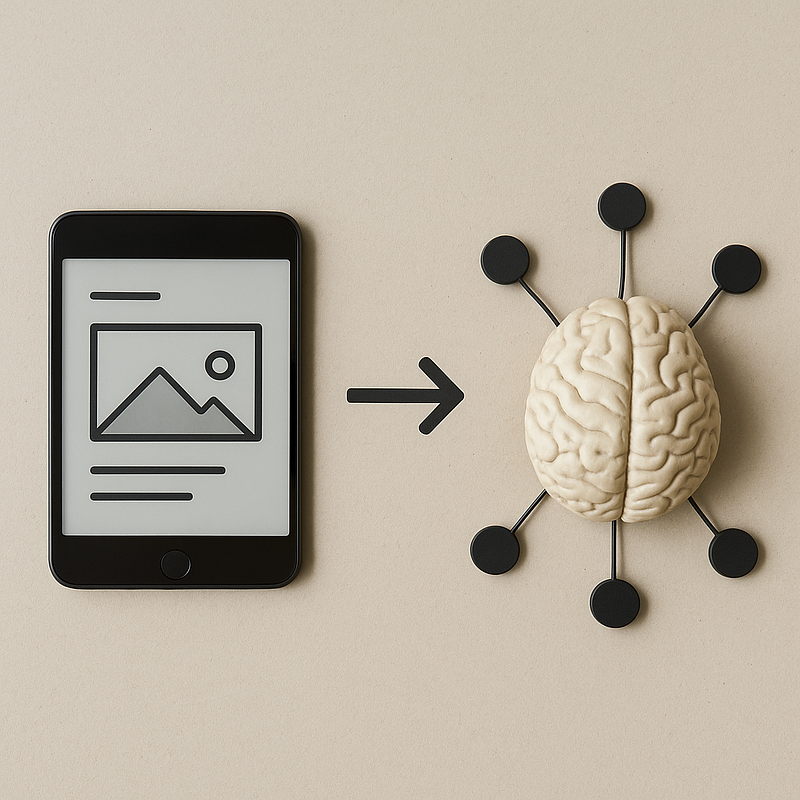
Open any product today — your banking app, the AI assistant in your car, the healthcare portal you reluctantly log into — and you’ll notice something curious: the screen is no longer the whole story.
Yes, there are still buttons, menus, and dashboards. But those are just surface-level entry points. The real product experience is increasingly hidden, driven by algorithms, workflows, and systems that you can’t fully see or touch.
This shift is what sparked my upcoming book, From Interface to Intelligence: UX in the Age of AI. The book isn’t about predicting a sci-fi future — it’s about acknowledging the present. A present where user experience can’t stop at the interface anymore.
This article is a teaser. A taste of what the book will explore, starting with the first chapter: From Screens to Systems.
The Age of the Interface
For decades, UX revolved around interfaces.
We obsessed over pixel grids, color palettes, and how many clicks it took to buy a pair of shoes. Success meant clarity and consistency on the screen.
And honestly, that was enough — for a while. When technology was mostly visual and transactional, users cared about smooth interactions: checkout flows, navigation menus, search bars.
Think of the golden age of mobile apps. A beautifully designed interface could make or break adoption. Remember the thrill when Instagram felt smoother than any other photo app? Or when Uber’s map felt like magic compared to typing in taxi phone numbers?
The interface was the product.
Why That Era Is Ending
But here’s the problem: when products become smarter, the screen becomes less central.
An AI-driven medical app doesn’t just show you data — it interprets your blood tests, compares them to millions of cases, and predicts risk factors.
Spotify doesn’t ask you what to play — it builds daily playlists you didn’t know you wanted.
Your thermostat doesn’t just wait for input — it learns your patterns and adjusts before you even notice.
In each case, the system is where the real experience happens. The interface? It’s just a thin access layer.
As designers, this forces us to rethink: Are we designing pixels, or are we designing trust in invisible systems?
A Personal Shift
I’ve felt this change firsthand in my own projects.
Not long ago, I was working on a workflow for a lab software product. Normally, I’d map out screens, forms, and error states. But in this case, the real challenge wasn’t the UI — it was how the system would process hundreds of data points in the background, flag anomalies, and guide users toward safe decisions.
The “design” wasn’t only about screens. It was about modeling system logic, making outputs explainable, and ensuring scientists could trust the results.
That was the moment I realized: UX for intelligent systems isn’t just interaction design. It’s systems thinking.
From Pixels to Patterns
When I say “from screens to systems,” I don’t mean abandoning interfaces. We’ll still need them. But the balance of power is shifting.
A designer’s job is no longer just:
- Make the app usable
- Make the flow consistent
- Make the button big enough to tap
Now it’s also:
- Make the algorithm understandable
- Make the outcome trustworthy
- Make the invisible visible — when it matters
That requires new tools, new methods, and maybe even a new mindset. Instead of designing only what’s seen, we design how the system behaves — and how people perceive that behavior.
Why This Matters Now
Some might say: “So what? Isn’t this just evolution?”
Yes, but it’s an urgent one.
Because every time a system makes a decision — what news you see, whether your loan is approved, what medical risk you’re flagged for — it affects lives. If users don’t trust the system, or don’t understand it, the sleekest interface won’t save you.
We can’t afford to stay at the surface.
And this is why the book exists: to equip designers with ways of thinking and working that embrace systems, not just screens.
What the Book Will Explore
The introduction is just the entry point. From here, the book expands into:
- Designing for trust in AI-driven experiences
- Patterns of human-AI collaboration
- Feedback loops and how they shape user confidence
- Ethical considerations when invisible systems make visible impacts
- Preparing designers for the future beyond buttons and dashboards
But it all starts here — with recognizing that the screen is not the experience. The system is.
We stand at a crossroads. One path keeps us polishing pixels, endlessly refining interfaces. The other path dares us to step deeper, into the messy but fascinating world of intelligent systems.
Neither path is wrong — but only one prepares us for the next decade of UX.
From Screens to Systems is my way of opening that conversation. The book will take it further.
If this resonates, stay tuned. The journey from interface to intelligence has only just begun.
Thanks for reading — I’m on a journey to understand how AI is reshaping the way we design, build, and think about products.
I write to explore ideas, question assumptions, and spark better conversations.
What’s something this made you reflect on? I’d love to hear your perspective in the comments.
Comments (0)
Loading comments...